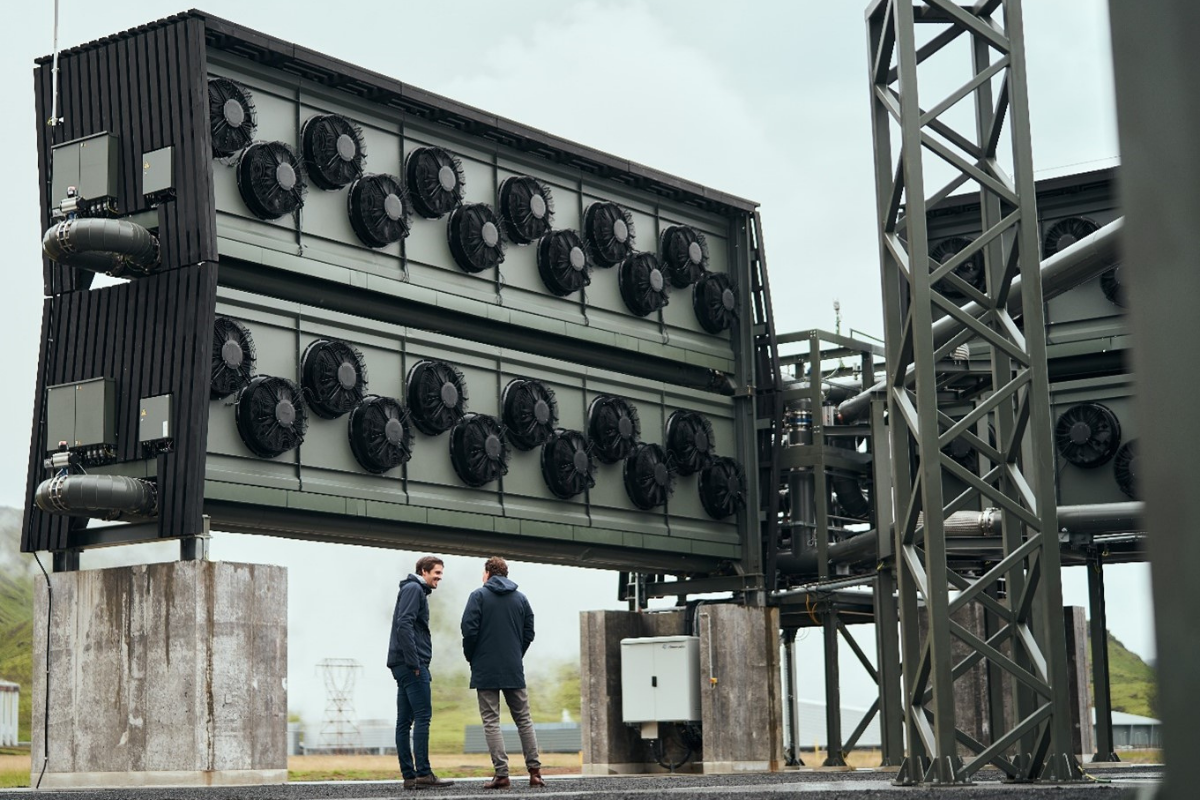
Three different climates, different renewable energies, and different approaches to carbon storage
Widespread deployment of DAC systems in the U.S. must account for wide variations in regional climates. Temperature and relative humidity can impact the efficiency of CO2 removal technologies.
The ISTC-led team will address climate efficiency challenges by testing the large-scale DAC systems and storing the captured CO2 at three test sites across the U.S., examining the effects of different climate conditions on CO2 storage.
Hot and very dry climate – A test site in southern California near the Salton Sea will be powered by geothermal energy, with the captured CO2 stored in a saline aquifer.
Hot and humid climate – A test site in Louisiana will use solar energy to power the DAC system while storing the captured CO2 in a saline aquifer.
Midcontinental climate – A test site in Wyoming will operate using wind power and store the captured CO2 in a depleted natural gas reservoir.
In addition to Climeworks, major partners in the project consortium include Kiewit Power Engineers, Lawrence Livermore National Laboratory, Gulf Coast Sequestration, North Shore Energy, Sunpower, Ormat, and Sentinel Peak.
For more information, read the entire DOE announcement.
Media contacts: Kevin OBrien, kcobrien@illinois.edu; news@prairie.illinois.edu